Massacre: Bodies that Matter 2
MPavilion Proposal – 2027
Artist statement
This exhibition explores the histories of queer communities in Melbourne who, between the 1970s and early 2000s, formed networks within hidden sites to navigate social exclusion and heteropatriarchal control, many of which became sites of violence and loss. Through the ongoing series Massacre – Bodies That Matter (2018–2027), the works foreground the marginalisation and harm experienced by LGBTQI+ individuals, examining how societal judgment and institutional neglect contributed to these conditions. Drawing on Italian architectural group Superstudio’s Continuous Monument, the exhibition reworks its reflective, monumental aesthetic to confront viewers with distorted self-images, prompting reflection on visibility, exclusion, and the idea of the “aberrant” body. By inserting references to marginalised identities into both a historically utopian yet exclusionary architectural vision and a contemporary modernist pavilion, the exhibition challenges dominant art and cultural narratives, calling for a deeper recognition of queer histories and more inclusive ways of understanding identity, space, and representation.
Connection to MPavilion
This exhibition positions MPavilion as a critical, site-responsive platform for confronting the histories of queer violence embedded within Melbourne’s parklands. Situated near Alexandra Gardens—an area associated with queer beats and histories of policing, surveillance, and assault—the project reconnects these narratives to their geographic origins while foregrounding the lived experiences of LGBTQI+ communities who forged connection under conditions of risk. MPavilion’s architectural language reinforces this dialogue; its restrained, pavilion-like form recalls the discreet public toilet blocks, such as the now-demolished Fitzroy Gardens toilet block that historically functioned as queer meeting places. By mobilising this spatial parallel, the exhibition transforms the pavilion into both a symbolic and material extension of these environments, encouraging reflection on how such architectures have operated as sites of intimacy and control. Through this site-responsive approach, the work reclaims the notion of the “mistake” as a form of resistance, asserting the persistence of queer presence while inviting audiences to engage critically with these histories within a contemporary public forum.
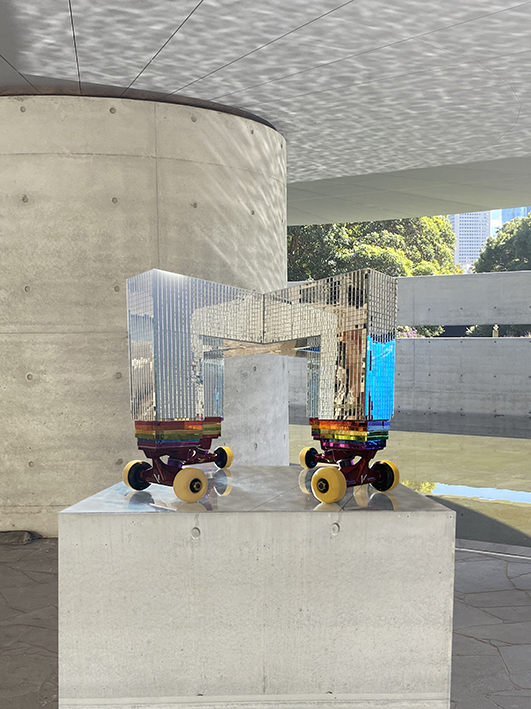
Glenn Walls. Massacre Super Pride (Superstudio – The Continuous Monument, 1969). Mirror tiles, skate wheels and mirrored plinth.
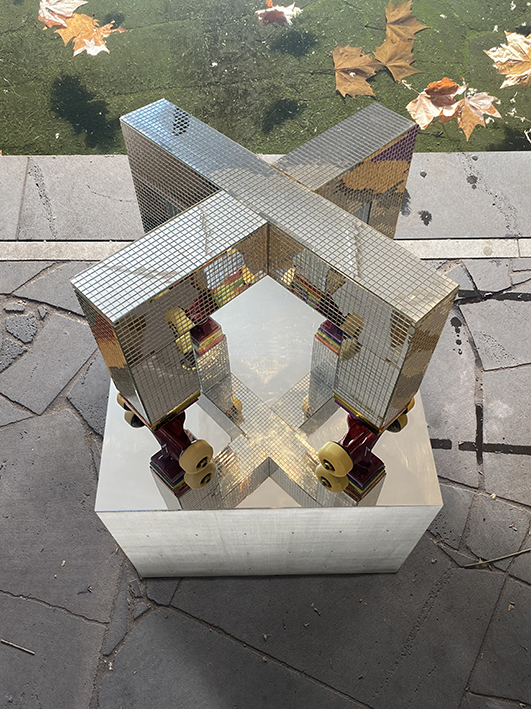
Glenn Walls. Massacre Super Pride (Superstudio – The Continuous Monument, 1969). Mirror tiles, skate wheels and mirrored plinth.
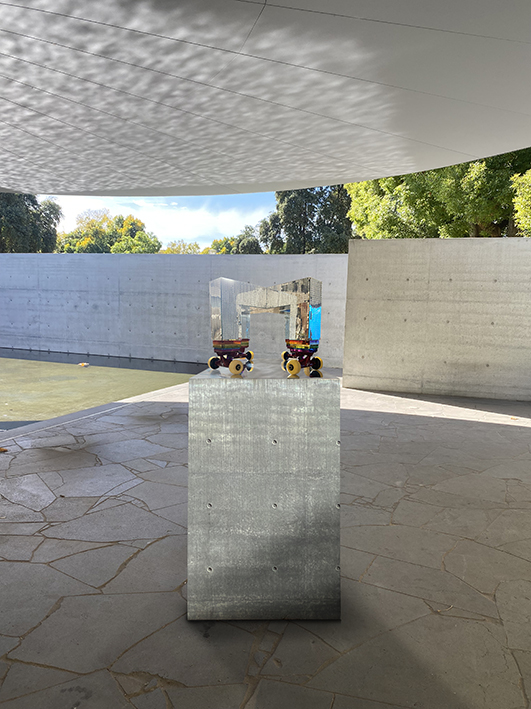
Glenn Walls. Massacre Super Pride (Superstudio – The Continuous Monument, 1969). Mirror tiles, skate wheels and mirrored plinth.
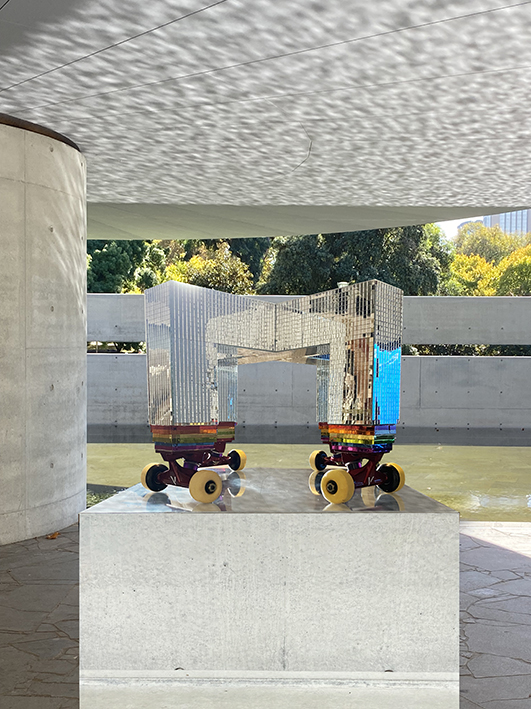
Glenn Walls. Massacre Super Pride (Superstudio – The Continuous Monument, 1969). Mirror tiles, skate wheels and mirrored plinth.
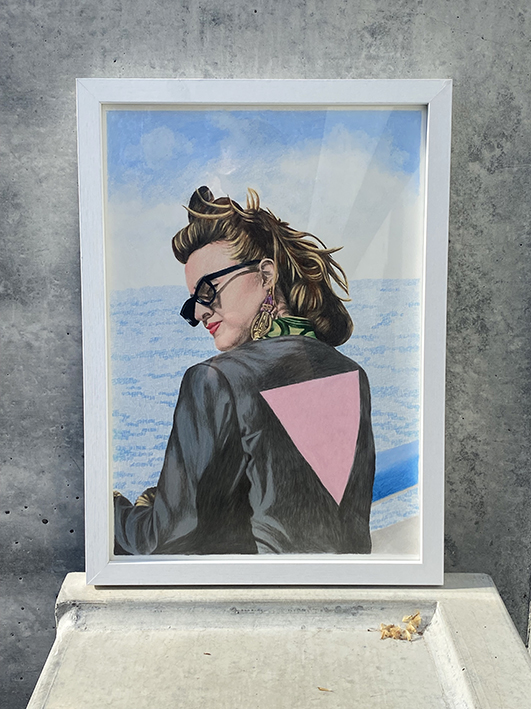
Glenn Walls. Massacre (Desperately Seeking Madonna). 2026. Drawing. 29 x 42 cms
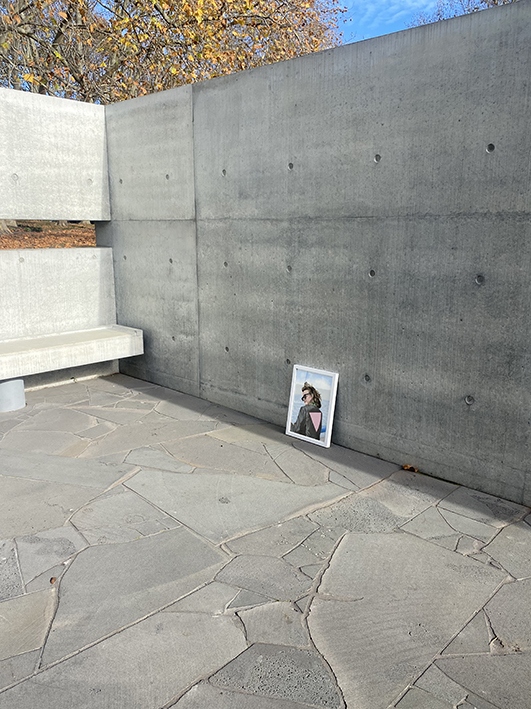
Glenn Walls. Massacre (Desperately Seeking Madonna). 2026. Drawing. 29 x 42 cms
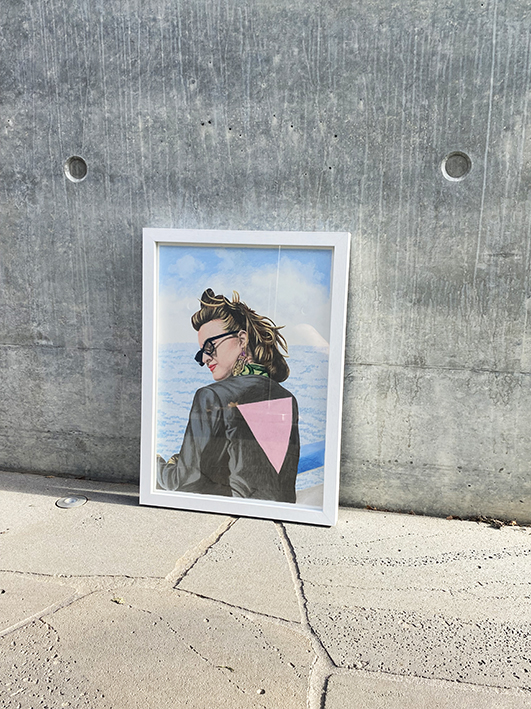
Glenn Walls. Massacre (Desperately Seeking Madonna). 2026. Drawing. 29 x 42 cms
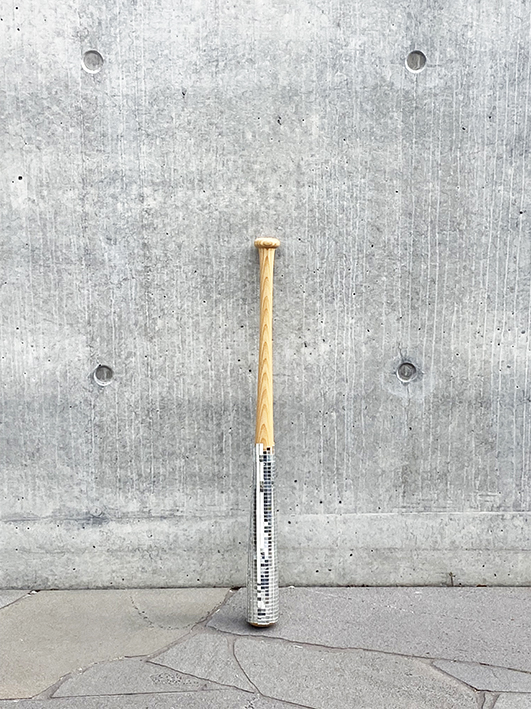
Glenn Walls. Massacre (Disco Glare). 2018/2024. Baseball bat and mirror tiles.
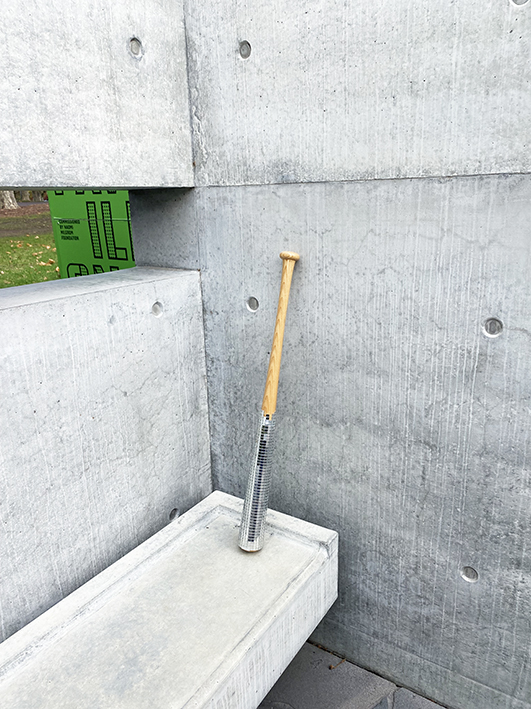
Glenn Walls. Massacre (Disco Glare). 2018/2024. Baseball bat and mirror tiles.
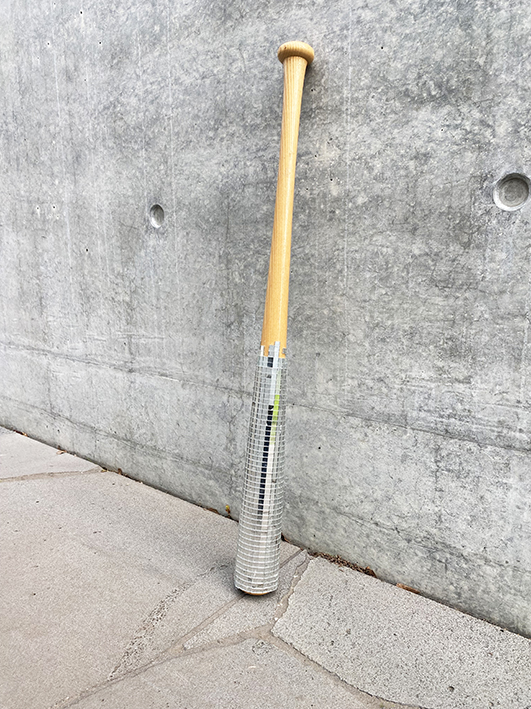
Glenn Walls. Massacre (Disco Glare). 2018/2024. Baseball bat and mirror tiles.
Massacre – Bodies that Matter: the mapping of queer violence in Sydney, Australia between 1970 and 2010
Published November 2024. Taylor & Francis. International Journal of Cartography.
https://www.tandfonline.com/doi/full/10.1080/23729333.2024.2419692
ABSTRACT
Between the 1970s and early 2000s, before queer visibility came to the fore in Sydney, many people living under heteropatriarchy developed ways to interact at queer sites. Unintelligible to the mainstream cultural imagination, the connections enabled by these sites allowed queer life to flourish. However, when they became known to other social groups the sites became epicentres of catastrophic violence, linked to 88 murders. Drawing on Vinicius Almeida’s (2022) concept of queer cartography, this article discusses an ongoing series of artworks titled Massacre – Bodies That Matter that challenges the heteronormativity embedded in urban space and highlights the violence inflicted on a marginalised group who during this period were fighting for their human right of recognition. Aided by religious organisations and institutions that denounced queer life as unacceptable to mainstream society, a collective of individuals and gangs took it upon themselves to rid society of this supposed abhorrent scrouge. In identifying forgotten queer spaces, mapping can explore the intersection of queer identity and violence. The article and artworks argue for the legitimacy of queer life, addressing the extent of violence perpetrated against the LGBTQI+ community in Sydney in the period discussed. This contributes to a more comprehensive understanding of the historical and spatial dimensions of violence against the LGBTQI+ community, which extends to a consideration of the reductive aesthetic language of modernist maps obscure a problematic relationship to identity and sexuality.
“Our blood runs in the streets and in the parks and in casualty and in the morgue
Our own blood, the blood of our brothers and sisters, has been spilt too often …
Our blood runs because in this country our political, educational, legal and religious systems actively encourage violence against us …”
- One in Seven Manifesto, Sydney Star Observer, April 5, 1991 (Sydney Star Observer, 1991).
Keywords
LGBTQI+ visibility, queer violence, queer cartography, Sydney queer hate crimes.
Link to the full research paper below.
https://www.tandfonline.com/doi/full/10.1080/23729333.2024.2419692

Glenn Walls. Massacre (after Felix). Digital Print on 4 × A3 paper stacks. 2018/2024.
Cite this paper.
Walls, G. (2024). Massacre – Bodies that Matter: the mapping of queer violence in Sydney, Australia between 1970 and 2010. International Journal of Cartography, 1–22. https://doi.org/10.1080/23729333.2024.2419692
My life (The Failure of Modernism)

Glenn Walls. Untitled (Fierce bitch seeks future ex-husband, David McDiarmid). 2024. Bauhaus coffee mug, dollar notes, printed paper. Various dimensions.
Fierce bitch seeks future ex-husband is an artwork by David McDiarmid created in 1994.

Glenn Walls. Untitled (Choose Life, Herbert Bayer). 2024. Bauhaus coffee mug, dollar notes, printed paper. Various dimensions.

Glenn Walls. Untitled (Less is a bore. Consume more, Herbert Bayer). 2024. Bauhaus coffee mug, dollar notes, printed paper. Various dimensions. Less is More is a quote from German architect Ludwig Mies van der Rohe.
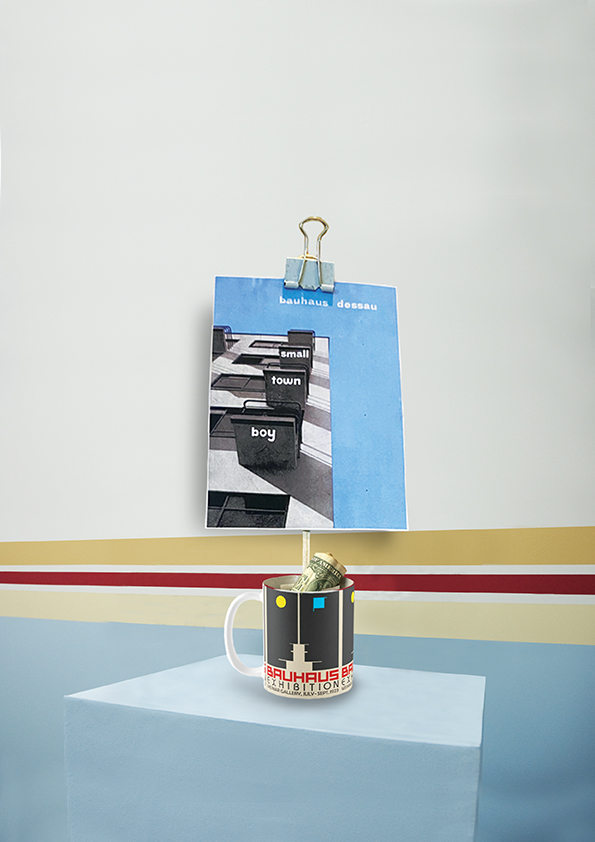
Glenn Walls. Untitled (Smalltown Boy, Herbert Bayer). 2024. Bauhaus coffee mug, dollar notes, printed paper. Various dimensions.
Smalltown Boy is a song by Bronski Beat released in 1984.
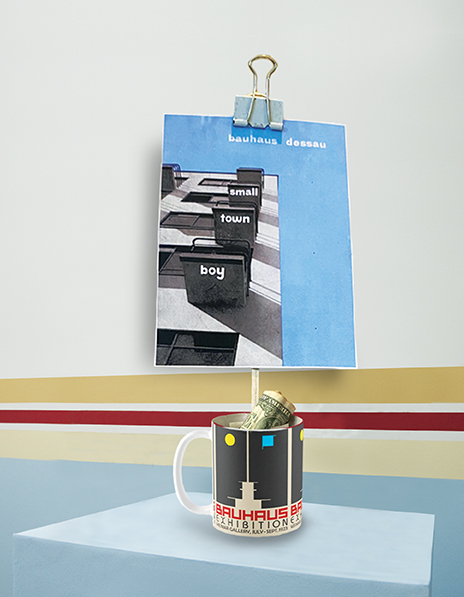
Glenn Walls. Untitled (Smalltown Boy, Herbert Bayer). 2024. Bauhaus coffee mug, dollar notes, printed paper. Various dimensions.
Smalltown Boy is a song by Bronski Beat released in 1984.
Super – Perfect Lovers

Glenn Walls. Perfect Lovers. Mirror tiles, paint, vinyl floor, and chains. 2021

Glenn Walls. Perfect Lovers. Mirror Tiles, paint, vinyl floor, and chains. 2021
Pandemic Architecture

Glenn Walls. I think we fucked up. (Theo Van Doesburgh, Contra-Construction: project for a private house. Axonometric. 1923). Pencil on paper. 2020. 21 x 29 cms


leave a comment