Massacre: Bodies that Matter 2
MPavilion Proposal – 2027
Artist statement
This exhibition explores the histories of queer communities in Melbourne who, between the 1970s and early 2000s, formed networks within hidden sites to navigate social exclusion and heteropatriarchal control, many of which became sites of violence and loss. Through the ongoing series Massacre – Bodies That Matter (2018–2027), the works foreground the marginalisation and harm experienced by LGBTQI+ individuals, examining how societal judgment and institutional neglect contributed to these conditions. Drawing on Italian architectural group Superstudio’s Continuous Monument, the exhibition reworks its reflective, monumental aesthetic to confront viewers with distorted self-images, prompting reflection on visibility, exclusion, and the idea of the “aberrant” body. By inserting references to marginalised identities into both a historically utopian yet exclusionary architectural vision and a contemporary modernist pavilion, the exhibition challenges dominant art and cultural narratives, calling for a deeper recognition of queer histories and more inclusive ways of understanding identity, space, and representation.
Connection to MPavilion
This exhibition positions MPavilion as a critical, site-responsive platform for confronting the histories of queer violence embedded within Melbourne’s parklands. Situated near Alexandra Gardens—an area associated with queer beats and histories of policing, surveillance, and assault—the project reconnects these narratives to their geographic origins while foregrounding the lived experiences of LGBTQI+ communities who forged connection under conditions of risk. MPavilion’s architectural language reinforces this dialogue; its restrained, pavilion-like form recalls the discreet public toilet blocks, such as the now-demolished Fitzroy Gardens toilet block that historically functioned as queer meeting places. By mobilising this spatial parallel, the exhibition transforms the pavilion into both a symbolic and material extension of these environments, encouraging reflection on how such architectures have operated as sites of intimacy and control. Through this site-responsive approach, the work reclaims the notion of the “mistake” as a form of resistance, asserting the persistence of queer presence while inviting audiences to engage critically with these histories within a contemporary public forum.
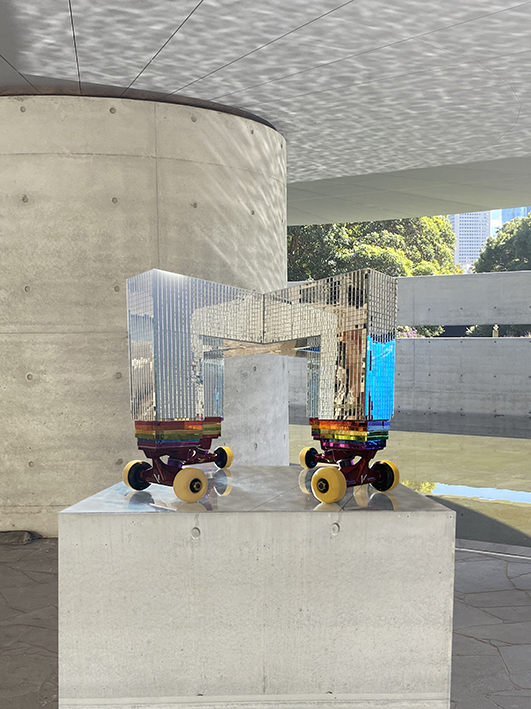
Glenn Walls. Massacre Super Pride (Superstudio – The Continuous Monument, 1969). Mirror tiles, skate wheels and mirrored plinth.
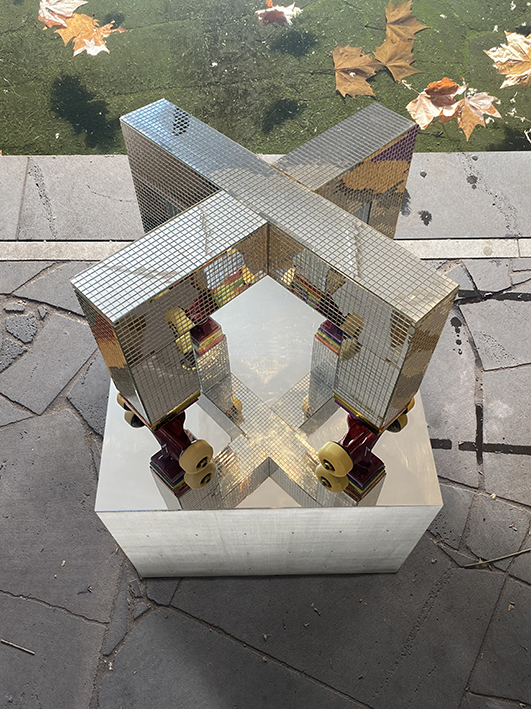
Glenn Walls. Massacre Super Pride (Superstudio – The Continuous Monument, 1969). Mirror tiles, skate wheels and mirrored plinth.
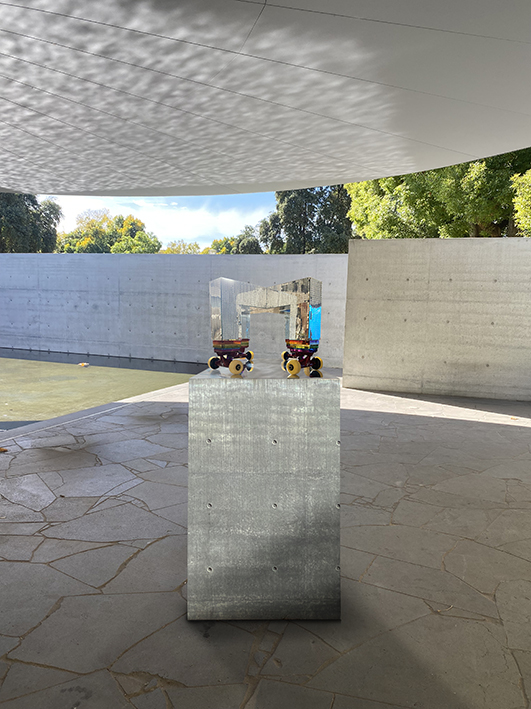
Glenn Walls. Massacre Super Pride (Superstudio – The Continuous Monument, 1969). Mirror tiles, skate wheels and mirrored plinth.
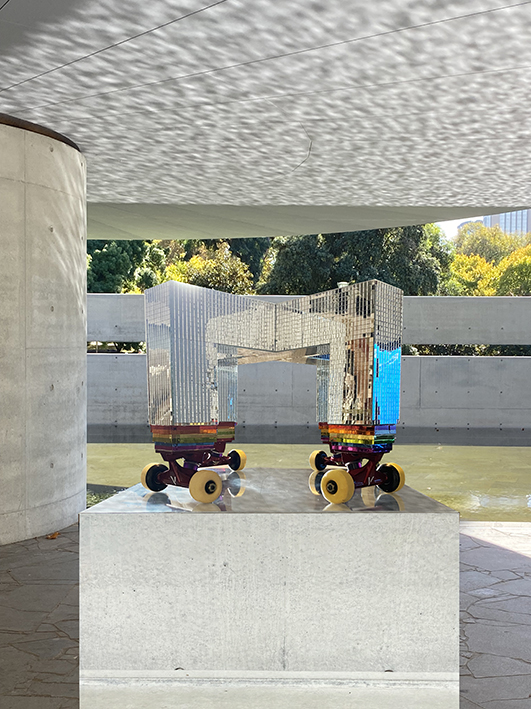
Glenn Walls. Massacre Super Pride (Superstudio – The Continuous Monument, 1969). Mirror tiles, skate wheels and mirrored plinth.
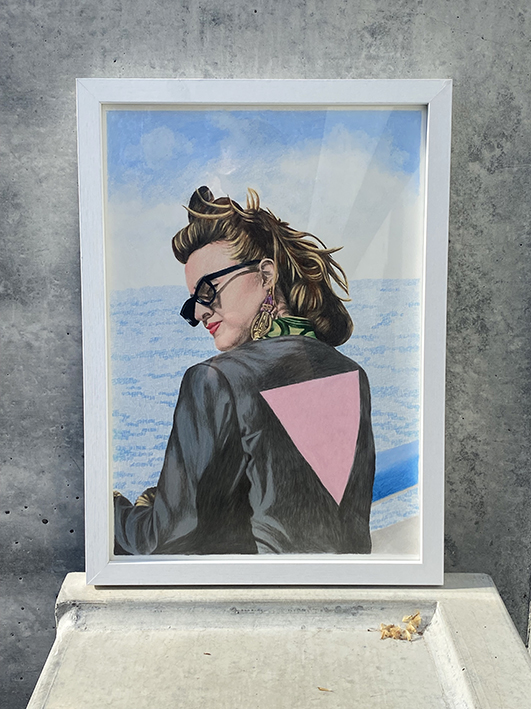
Glenn Walls. Massacre (Desperately Seeking Madonna). 2026. Drawing. 29 x 42 cms
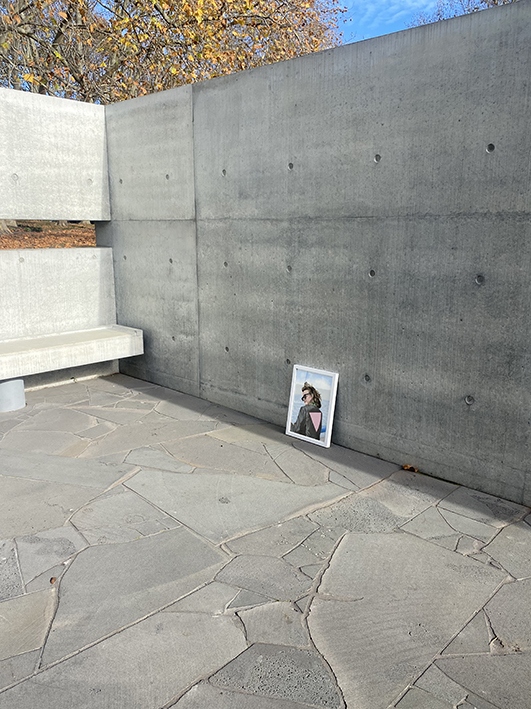
Glenn Walls. Massacre (Desperately Seeking Madonna). 2026. Drawing. 29 x 42 cms
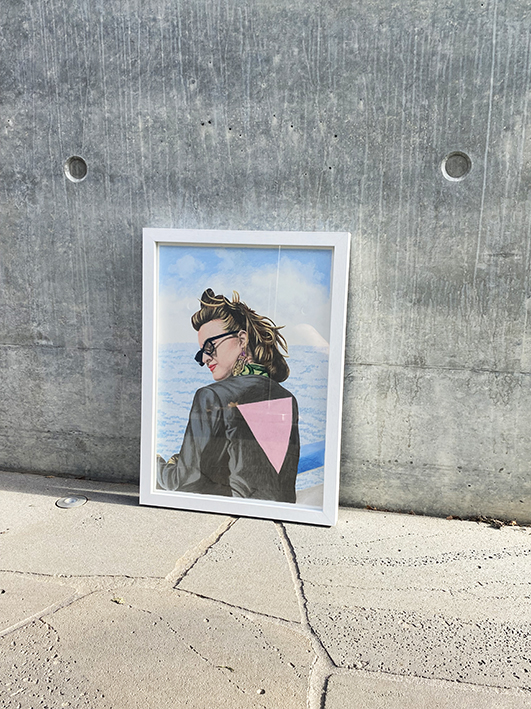
Glenn Walls. Massacre (Desperately Seeking Madonna). 2026. Drawing. 29 x 42 cms
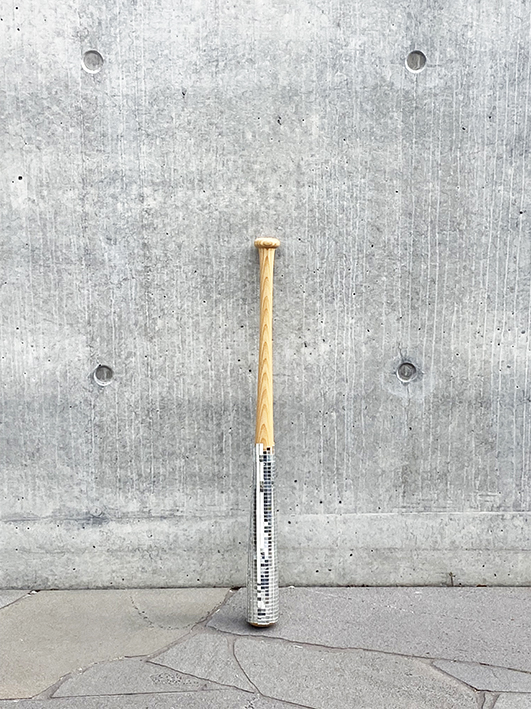
Glenn Walls. Massacre (Disco Glare). 2018/2024. Baseball bat and mirror tiles.
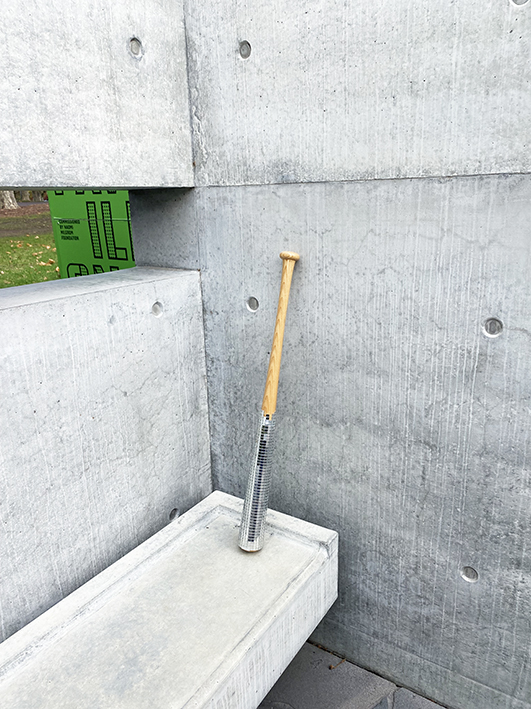
Glenn Walls. Massacre (Disco Glare). 2018/2024. Baseball bat and mirror tiles.
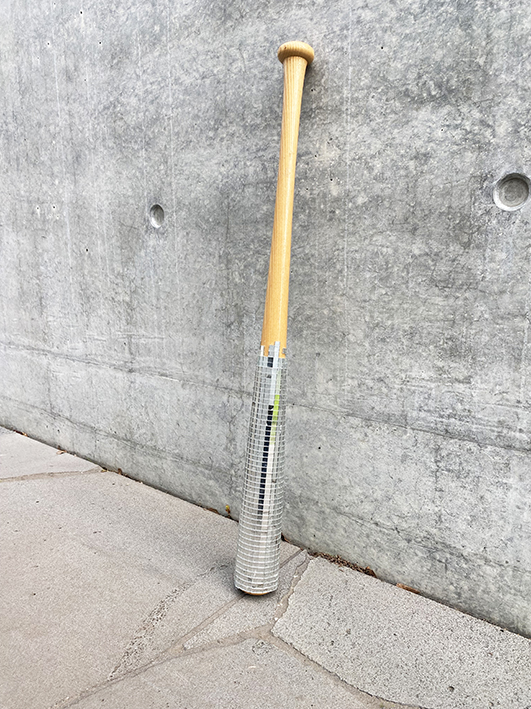
Glenn Walls. Massacre (Disco Glare). 2018/2024. Baseball bat and mirror tiles.
The Modern World – Berlin

Glenn Walls. Untitled (Am I ever going to see your face again). 2023. Digital Print. Photographed on location at the Neue Nationalgalerie, Berlin, July 2023. Designed by Ludwig Mies van der Rohe in 1968. Text from the 1977 song, ‘Am I Ever Gonna See Your Face Again’ by Australian band The Angels.

Glenn Walls. Untitled (Me). 2023. Digital Print. Photographed on location in Berlin, July 2023.

Glenn Walls. Untitled (Meth is a big thing here. Meth and Modernism). 2023. Digital Print. Photographed on location at the Neue Nationalgalerie, Berlin, January 2023. Designed by Ludwig Mies van der Rohe in 1968. Text from the 2017 film ‘Columbus’ set in Columbus, Indiana, USA.
Comments Off on The Modern World – Berlin
Untitled (Forever Young, The Smiths). There is a light that never goes out. Detail.

Glenn Walls. Untitled (Forever Young, The Smiths). Mirror tiles, laser cut metal, gold beads, 2022. Words are taken from The Smiths’ 1985 song “There is a light that never goes out”.

Glenn Walls. Untitled (Forever Young, The Smiths). Mirror tiles, laser cut metal, gold beads, 2022. Words are taken from The Smiths’ 1985 song “There is a light that never goes out”.
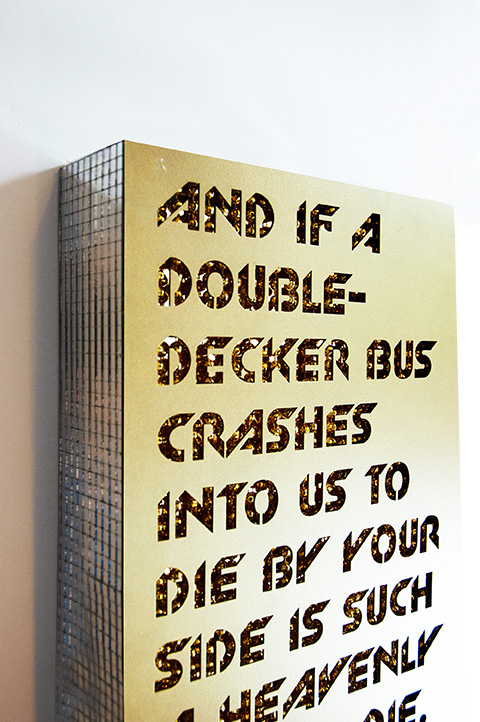
Glenn Walls. Untitled (Forever Young, The Smiths). Mirror tiles, laser cut metal, gold beads, 2022. Words are taken from The Smiths’ 1985 song “There is a light that never goes out”.
Rationale
Architecture’s preoccupation with ‘normality’ has left little room for queer space to come to the fore. My current practice contributes to the public acknowledgment of queer space in the built environment by highlighting hidden identities. I am interested in creating a personal definition of queer space that is not hidden and is a reaction against normative symbols of masculinity and the ‘heterosexual assumption’ presented by 1960s Italian architectural group Superstudio anti-design grid.
This work extends my practice to encompass a boarder approach to queer space through the placement of text from queer-identifying writers and singers in the built environment. This work aims to highlight how a perceived dominant heterosexual space can be altered to queer space. Utilising the language of Superstudio’s Anti-design grid that overshadow the personal and private needs of the individual I construct narratives, in this case by incorporating the lyrics by perceived queer singer/songwriter Morrisey of The Smiths that adds new layers to Superstudio’s anti-design mirrored grid architecture to imbue it with personal significance.
“And if a double-decker bus crashes into us to die by your side is such a heavenly way to die” is from The Smiths’ 1985 song, “There is a light and it never goes out”.
This work centres on redefining the masculine/heterosexual dominance of modernist structures and spaces via texts and realigns it with a sexual minority.
Comments Off on Untitled (Forever Young, The Smiths). There is a light that never goes out. Detail.
Seven Magic Mountains- Ugo Rondinone

Ugo Rondinone. Seven Magic Mountains. 2016. Produced by Nevada Museum of Art and Art Production Fund.
A large-scale desert artwork. Las Vegas, Nevada.
Artist Statement: Seven Magic Mountains is an artwork of thresholds and crossings, of balance marvels and excessive colors, of casting and gathering, and the contrary air between the desert and the city lights.
I have used queer artist Ugo Rondinone boulders from this installation in a number of artworks in recent years. All were photoshopped from photographs from friends. Hence it was with great pleasure that I was able to recently visit Seven Magic Mountains and photograph this incredible installation in the Nevada desert myself. The day we visited the work was a hot 44 Celsius or 111 Fahrenheit. Needless to say, we were unable to spend a huge amount of time in the heat but it was enough to get some great photos of the installation and explore the majestic nature of the sculpture.
Sadly the bases of the seven works had been heavily graffitied. I will never understand why people feel the need to do this. Enjoy.


Super – I keep dancing on my own

Glenn Walls. I keep dancing on my own. Wood, mirror perspex & paint. 2020

Glenn Walls. I keep dancing on my own + mirror cube. Wood, mirror perspex, paint, mirror tiles and chain. 2020
Comments Off on Super – I keep dancing on my own
Pandemic Architecture

Glenn Walls. I think we fucked up. (Theo Van Doesburgh, Contra-Construction: project for a private house. Axonometric. 1923). Pencil on paper. 2020. 21 x 29 cms


leave a comment