Massacre
Between the 1970s and early 2000s, before the surge in queer visibility in Sydney, non-normative gender and sexual communities formed connections at hidden queer sites to navigate heteropatriarchal constraints. These sites, once vital hubs for queer life, became targets of violent acts, leading to 88 tragic murders. Utilising existing photographs, found in various LGBTQI+ publications and news sites, these drawings examine the series of ongoing artworks titled Massacre – Bodies That Matter, 2018/2026, spotlighting the violence faced by marginalised queers seeking acknowledgement, where societal condemnation and institutional neglect led to acts of violence. This inquiry contributes to understanding the historical and spatial dimensions of violence against LGBTQI+ individuals, calling for a rethink of modern drawing conventions to reveal the complexities of identity and sexuality.
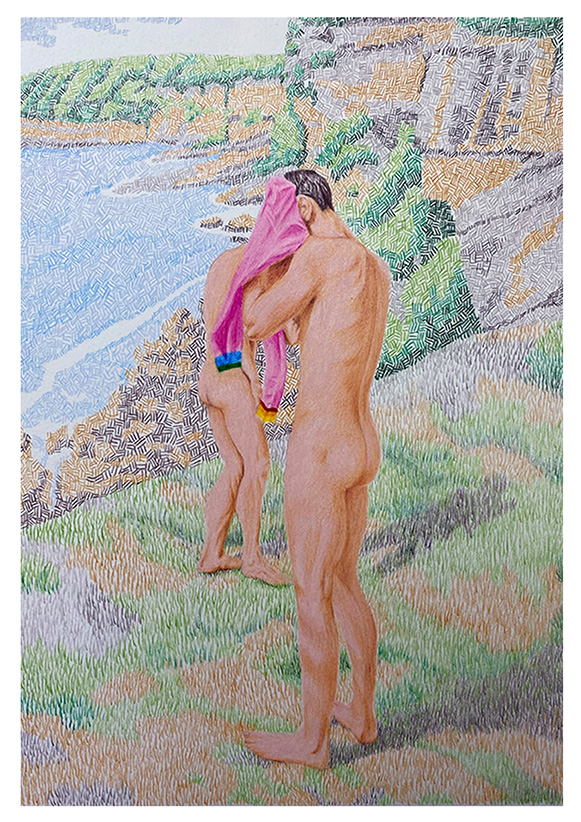
Glenn Walls. Massacre – Location of the murder of Scott Johnson on the 8th December, 1988, at Blue Fish Point in North Head near Manly, Sydney, Australia. The area was known as a gay beat.
Drawing on Paper. 297 x 420 mm. 2026
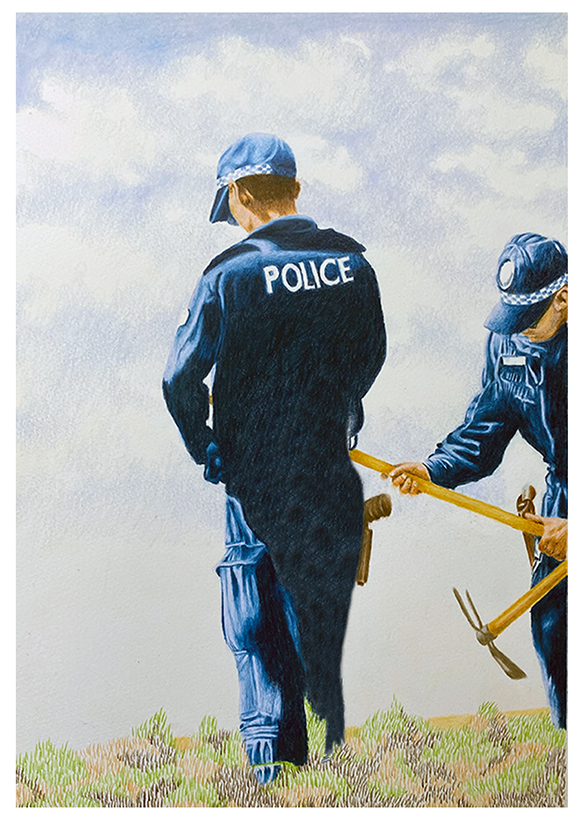
Glenn Walls. Massacre – Location of the murder of Scott Johnson on the 8th December, 1988, at Blue Fish Point in North Head near Manly, Sydney, Australia. The area was known as a gay beat.
Drawing on Paper. 297 x 420 mm. 2026
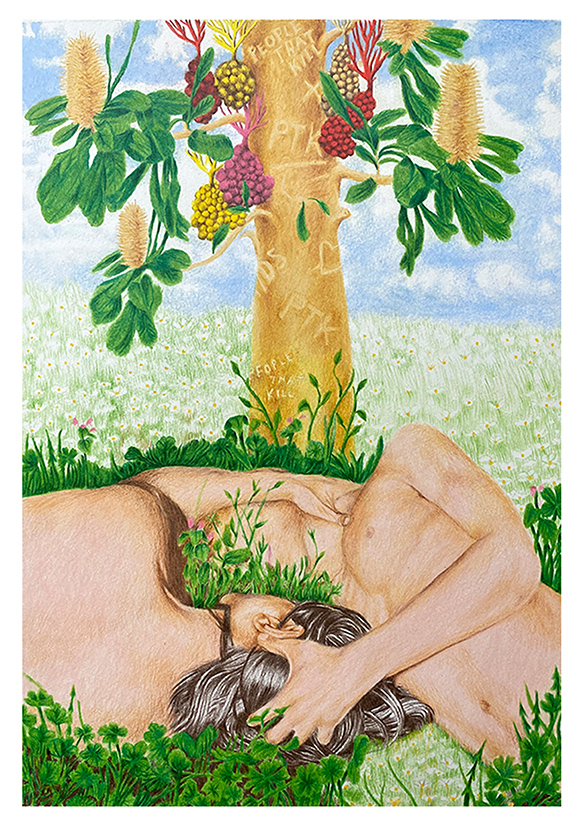
Glenn Walls. Massacre – According to journalist Greg Callaghan, “The Bondi Boys were a large group of 30 youths aged 12–18. They’re linked mainly to deaths at Marks Park and called themselves PTK (“People that Kill”) and PSK (“Park Side Killers”)”, (Callaghan, 2021) as carved in the drawing’s tree
Drawing on Paper. 297 x 420 mm. 2026
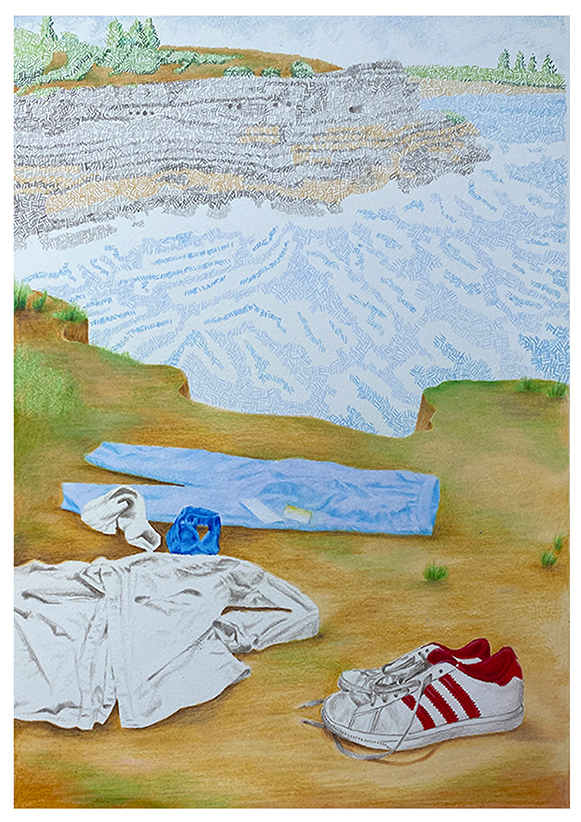
Glenn Walls. Massacre – “It was December 10, 1988, when Scott’s naked body was found by two rock fishermen at the base of the cliff, near Blue Fish Point, just south of Manly, on Sydney’s northern beaches. Police immediately deemed the death a suicide. Furthermore, as Scott’s clothes had been found neatly folded on the clifftop above, the death was considered a “ritual suicide” (Kontominas, 2017).
Drawing on Paper. 297 x 420 mm. 2026
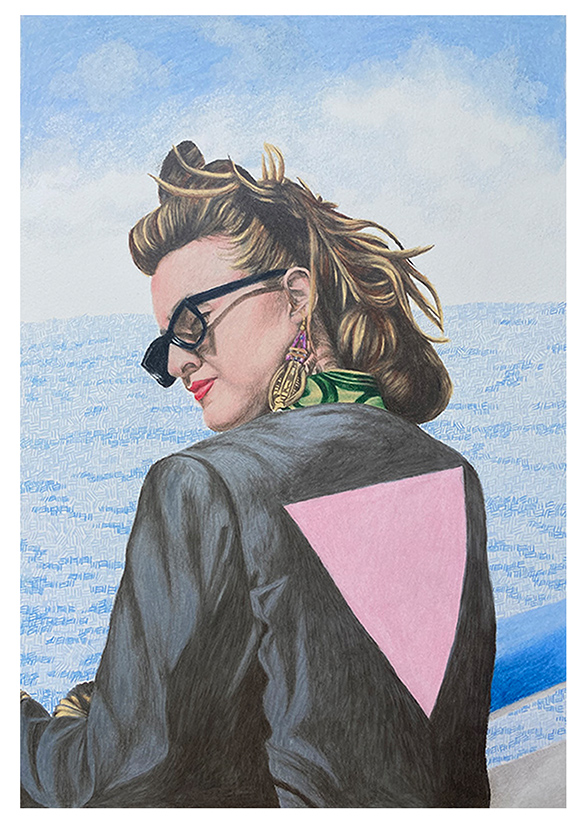
Glenn Walls. Massacre: Madonna, a leading advocate for the LGBTQI+ community, was at her height when these hate crimes were taking place in Sydney.
Drawing on Paper. 297 x 420 mm. 2026
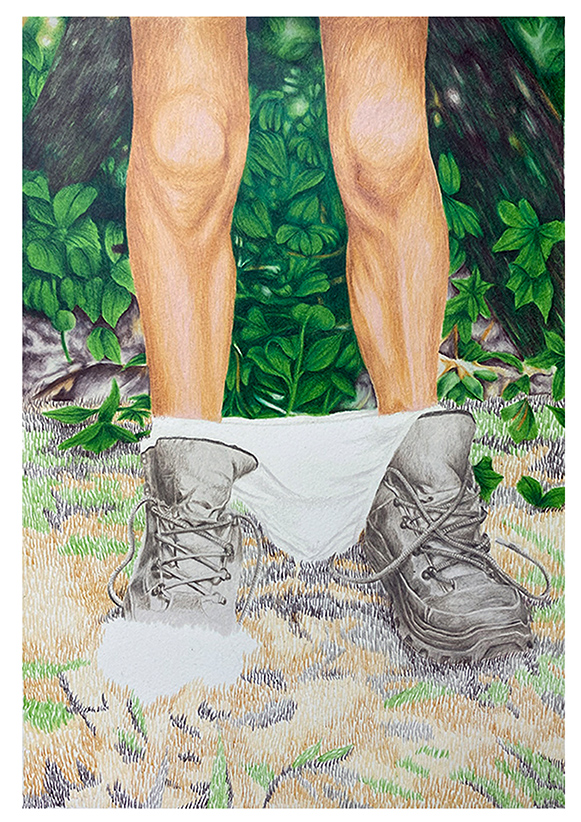
Glenn Walls. Massacre – “Marks Park, a grassy verge capping the headland and the concrete pathway skirting the cliff face, had been a gay beat – a place where homosexual men would socialise and hook up – since at least the late 1920s” (Callaghan, 2021)..
Drawing on Paper. 297 x 420 mm. 2026 (Incomplete)
References
Callaghan, G. (2021, October 1). ‘A willingness to write crimes off’: on the trail of the Bondi killers. The Age. https://www.theage.com.au/national/a-willingness-to-write-crimes-off-on-the-trail-of-the-bondi-killers-20210903-p58oo4.html
Davis, K. (2007). Bondi’s underbelly: the ‘gay gang murders’. QUEER SPACE: CENTRES AND PERIPHERIES, UTS. file:///Users/gfinley/Downloads/Bondis_underbelly_the_gay_gang_murders.pdf
Kontominas, B. (2017, November 30). Scott Johnson: Inside one brother’s 30-year fight to find the truth. ABC News Australia. https://www.abc.net.au/news/2017-11-30/scott-johnson-inside-brothers-fight-to-find-the-truth/9211466
Massacre – Bodies the Matter: the mapping of queer violence in Sydney, Australia between 1970 and 2010
Published November 2024. Taylor & Francis. International Journal of Cartography.
https://www.tandfonline.com/doi/full/10.1080/23729333.2024.2419692
ABSTRACT
Between the 1970s and early 2000s, before queer visibility came to the fore in Sydney, many people living under heteropatriarchy developed ways to interact at queer sites. Unintelligible to the mainstream cultural imagination, the connections enabled by these sites allowed queer life to flourish. However, when they became known to other social groups the sites became epicentres of catastrophic violence, linked to 88 murders. Drawing on Vinicius Almeida’s (2022) concept of queer cartography, this article discusses an ongoing series of artworks titled Massacre – Bodies That Matter that challenges the heteronormativity embedded in urban space and highlights the violence inflicted on a marginalised group who during this period were fighting for their human right of recognition. Aided by religious organisations and institutions that denounced queer life as unacceptable to mainstream society, a collective of individuals and gangs took it upon themselves to rid society of this supposed abhorrent scrouge. In identifying forgotten queer spaces, mapping can explore the intersection of queer identity and violence. The article and artworks argue for the legitimacy of queer life, addressing the extent of violence perpetrated against the LGBTQI+ community in Sydney in the period discussed. This contributes to a more comprehensive understanding of the historical and spatial dimensions of violence against the LGBTQI+ community, which extends to a consideration of the reductive aesthetic language of modernist maps obscure a problematic relationship to identity and sexuality.
“Our blood runs in the streets and in the parks and in casualty and in the morgue
Our own blood, the blood of our brothers and sisters, has been spilt too often …
Our blood runs because in this country our political, educational, legal and religious systems actively encourage violence against us …”
- One in Seven Manifesto, Sydney Star Observer, April 5, 1991 (Sydney Star Observer, 1991).
Keywords
LGBTQI+ visibility, queer violence, queer cartography, Sydney queer hate crimes.
Link to the full research paper below.
https://www.tandfonline.com/doi/full/10.1080/23729333.2024.2419692

Glenn Walls. Massacre (after Felix). Digital Print on 4 × A3 paper stacks. 2018/2024.
Cite this paper.
Walls, G. (2024). Massacre – Bodies the Matter: the mapping of queer violence in Sydney, Australia between 1970 and 2010. International Journal of Cartography, 1–22. https://doi.org/10.1080/23729333.2024.2419692
In the Park Again

Glenn Walls. (Death and Dancing) In the Park Again. 2024 (Version 1). Alvar Aalto, Stool 60, 1933, paper stack, Image of Scott Johnson who was murdered in 1988. Contains an image of the painting, “Sir Sampson Gideon and an unidentified companion”, 1767 by Pompeo Batoni. National Gallery of Victoria. Installation view.
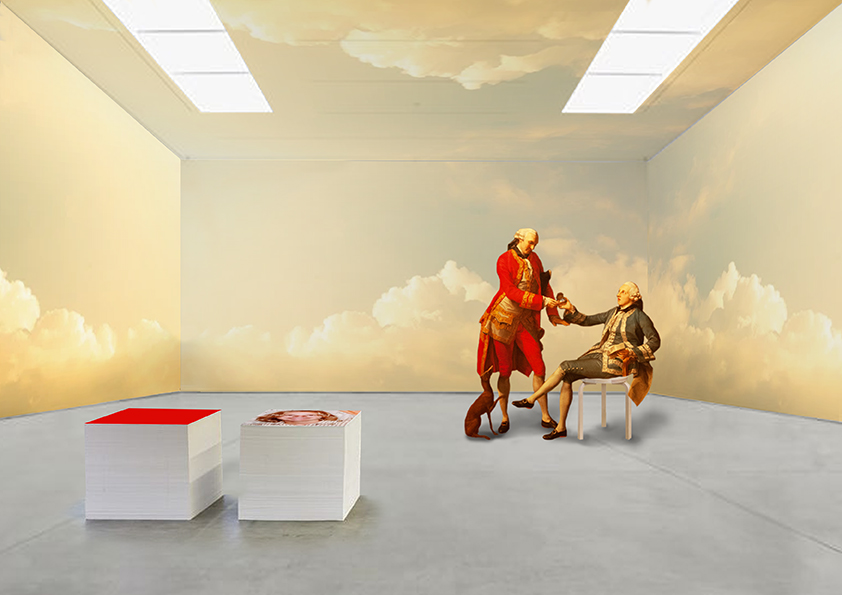
Glenn Walls. (Death and Dancing) In the Park Again. 2024 (Version 2). Alvar Aalto, Stool 60, 1933, paper stack, Image of Scott Johnson who was murdered in 1988. Contains an image of the painting, “Sir Sampson Gideon and an unidentified companion”, 1767 by Pompeo Batoni. National Gallery of Victoria. Installation view.
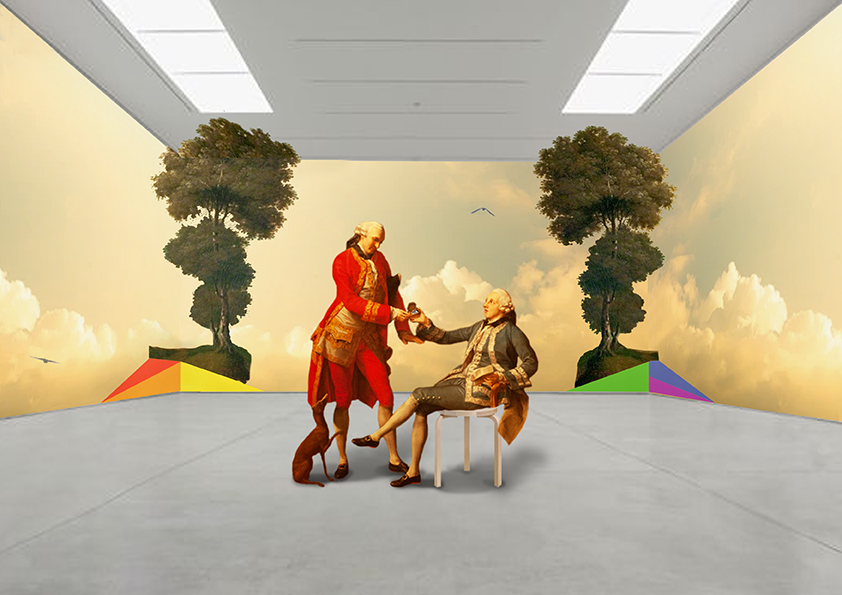
Glenn Walls. (Death and Dancing) In the Park Again. 2024 (Version 3). Alvar Aalto, Stool 60, 1933, Gay Flag. Contains an image of the painting, “Sir Sampson Gideon and an unidentified companion”, 1767 by Pompeo Batoni. National Gallery of Victoria. Installation view.
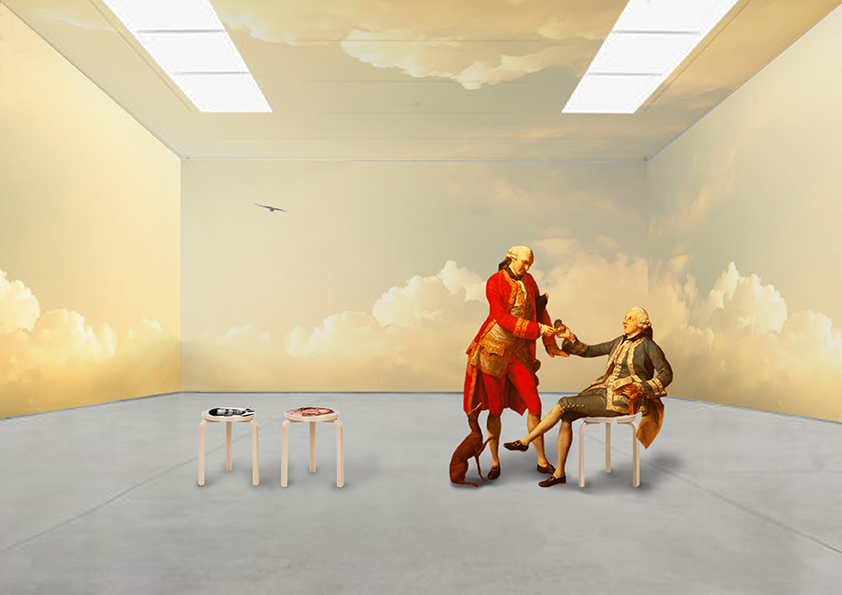
Glenn Walls. (Death and Dancing) In the Park Again. 2024 (Version 4). Alvar Aalto, Stool 60, 1933, paper stack, Image of Scott Johnson who was murdered in 1988 and Ross Warren who was murdered in 1989. Contains an image of the painting, “Sir Sampson Gideon and an unidentified companion”, 1767 by Pompeo Batoni. National Gallery of Victoria. Installation view.
Between the 1970s and early 2000s, before queer visibility came to the fore in Sydney, Australia, many gender and sexual non-normative people living under the conditions of heteropatriarchy managed to develop different ways of interacting with others at queer sites and spaces. Unintelligible in the mainstream cultural imagination, these practices of communication and connection were a means of survival that enabled queer life to flourish. However, when the location of these queer sites became known to certain other social groups, they became epicentres of catastrophic violence, linked to 88 murders. The works developed for “In the Park” explore how gender and non-normative people gravitated to Sydney to create new identities and communities making them the target of stigmatization and violence by a small minority. The artworks argue for the legitimacy of queer life, revealing the extent of violence perpetrated against the LGBTQI+ community. I hope to contribute to a more comprehensive understanding of the historical and spatial dimensions of violence against the LGBTQI+ community and advocate for its more nuanced portrayal in contemporary narratives. By harnessing the language of modernist furniture and maps which created a sense of clean, clinical space free of interpretation, these artworks contest dominant views of modernist design and humanise modernist/minimalist theory and practice to obscure its problematic relationship to identity and sexuality.
In the Park

Glenn Walls. (Death and Dancing) In the Park. 2024. Alvar Aalto, Stool 60, 1933, Gay flag, Stencil, Yellow Paint. Contains an image of the painting, “Two dancing male figures in a landscape”. Anonymous, French, 18th Century. The Met Fifth Avenue. Installation view.

Glenn Walls. (Death and Dancing) In the Park. 2024. White paper stack, Yellow Paint. Contains an image of Ross Warren who was one of the victims of the gay killing spree that took place in Sydney in the late 20th Century. Ross Warren is suspected of being murdered on 22nd July 1989.

Glenn Walls. (Death and Dancing) In the Park. 2024. Alvar Aalto, Stool 60, 1933, Gay flag, Stencil, Yellow Paint. Contains an image of the painting, “Two dancing male figures in a landscape”. Anonymous, French, 18th Century. The Met Fifth Avenue. Installation view. Also contains an image of Ross Warren who was murdered in 1989.
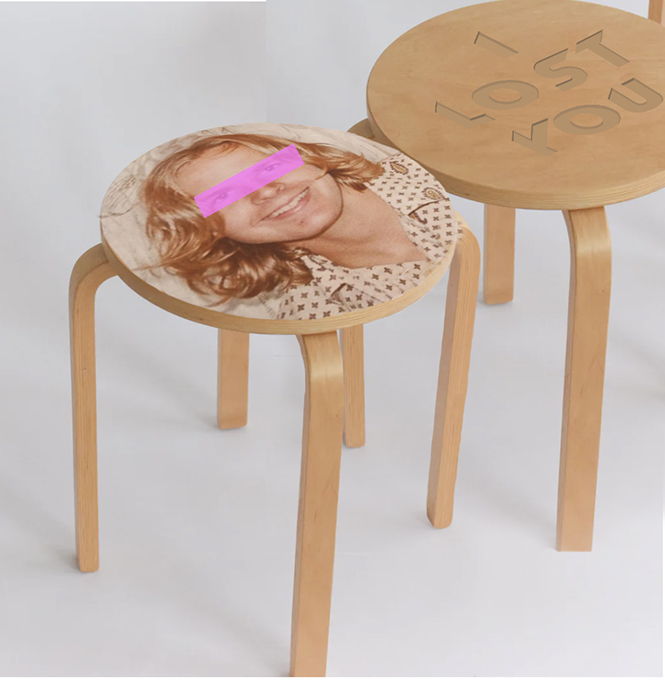
Glenn Walls. (Death and Dancing) In the Park. 2024. Alvar Aalto, Stool 60, 1933, Contains an image of Scott Johnson who was murdered on the 8th December 1988 in Manly.

Glenn Walls. (Death and Dancing) In the Park. 2024. Alvar Aalto, Stool 60, 1933, Gay flag, Stencil. Contains an image of the painting, “Two dancing male figures in a landscape”. Anonymous, French, 18th Century. The Met Fifth Avenue. Installation view.
Artist Statement
Between the 1970s and early 2000s, before queer visibility came to the fore in Sydney, Australia, many gender and sexual non-normative people living under the conditions of heteropatriarchy managed to develop different ways of interacting with others at queer sites and spaces. Unintelligible in the mainstream cultural imagination, these practices of communication and connection were a means of survival that enabled queer life to flourish. However, when the location of these queer sites became known to certain other social groups, they became epicentres of catastrophic violence, linked to 88 murders. The works developed for “In the Park” explore how gender and non-normative people gravitated to Sydney to create new identities and communities making them the target of stigmatization and violence by a small minority. The artworks argue for the legitimacy of queer life, revealing the extent of violence perpetrated against the LGBTQI+ community. I hope to contribute to a more comprehensive understanding of the historical and spatial dimensions of violence against the LGBTQI+ community and advocate for its more nuanced portrayal in contemporary narratives. By harnessing the language of modernist furniture and maps which created a sense of clean, clinical space free of interpretation, these artworks contest dominant views of modernist design and humanise modernist/minimalist theory and practice to obscure its problematic relationship to identity and sexuality.
Losing my Religion
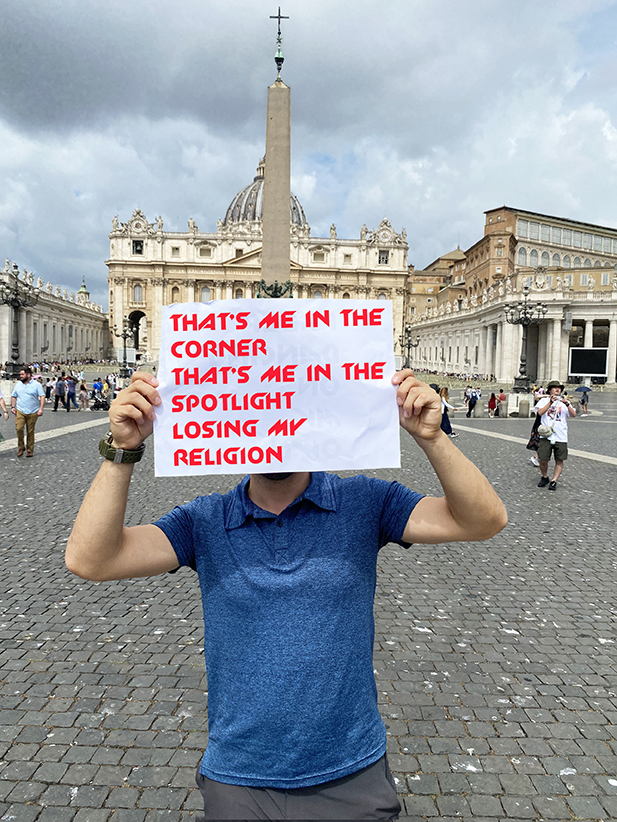
Glenn Walls. That’s me in the corner. That’s me in the spotlight. Losing my Religion. Digital print. 2023. Shot on location at the Vatican, Rome. July 2023.
Words taken from R.E.M song ‘Losing my Religion’. Released 1991.
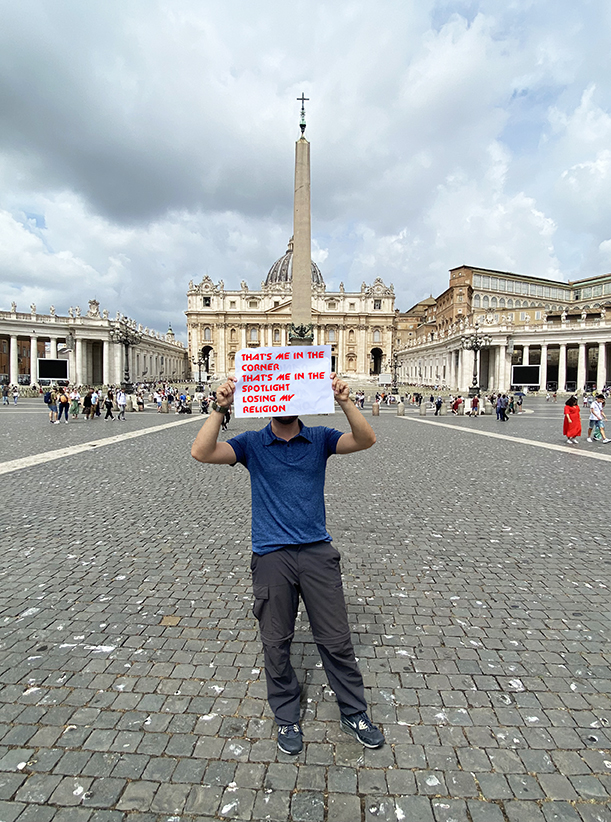
Glenn Walls. That’s me in the corner. That’s me in the spotlight. Losing my Religion. Digital print. 2023. Shot on location at the Vatican, Rome. July 2023.
Words taken from R.E.M song ‘Losing my Religion’. Released 1991.
Comments Off on Losing my Religion
Forever Young. Installation view.

Glenn Walls. Untitled (Take a look at the law man beating up the wrong guy). Metal plate, paper stack. 2022. Words are taken from David Bowie’s 1971 – 73 song “Life on Mars”.
Comments Off on Forever Young. Installation view.

 Glenn Walls - SUPER CREATIVE GRID
leave a comment