In the Park Again

Glenn Walls. (Death and Dancing) In the Park Again. 2024 (Version 1). Alvar Aalto, Stool 60, 1933, paper stack, Image of Scott Johnson who was murdered in 1988. Contains an image of the painting, “Sir Sampson Gideon and an unidentified companion”, 1767 by Pompeo Batoni. National Gallery of Victoria. Installation view.
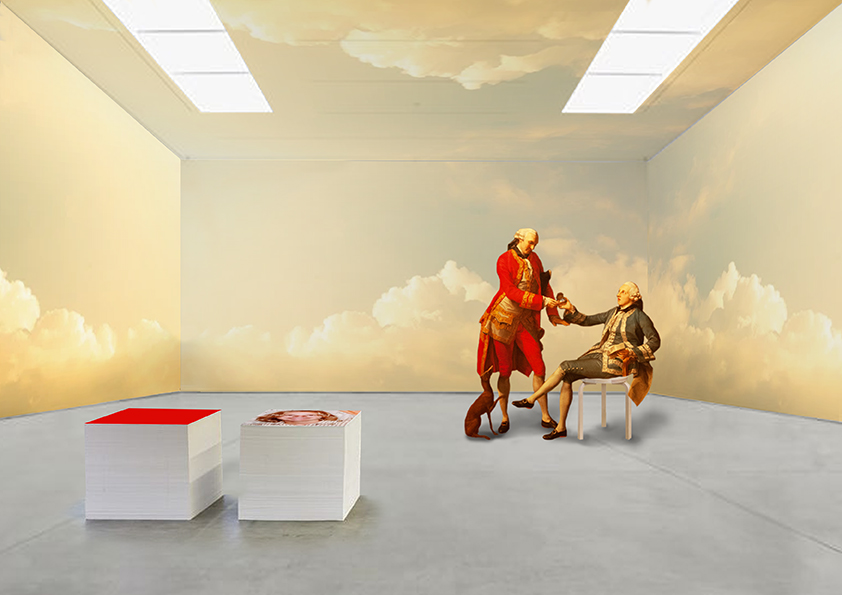
Glenn Walls. (Death and Dancing) In the Park Again. 2024 (Version 2). Alvar Aalto, Stool 60, 1933, paper stack, Image of Scott Johnson who was murdered in 1988. Contains an image of the painting, “Sir Sampson Gideon and an unidentified companion”, 1767 by Pompeo Batoni. National Gallery of Victoria. Installation view.
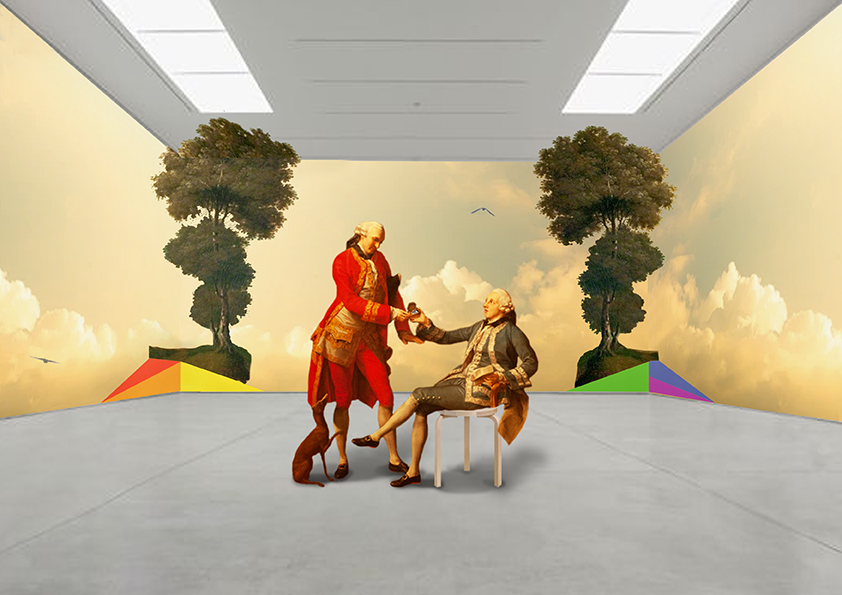
Glenn Walls. (Death and Dancing) In the Park Again. 2024 (Version 3). Alvar Aalto, Stool 60, 1933, Gay Flag. Contains an image of the painting, “Sir Sampson Gideon and an unidentified companion”, 1767 by Pompeo Batoni. National Gallery of Victoria. Installation view.
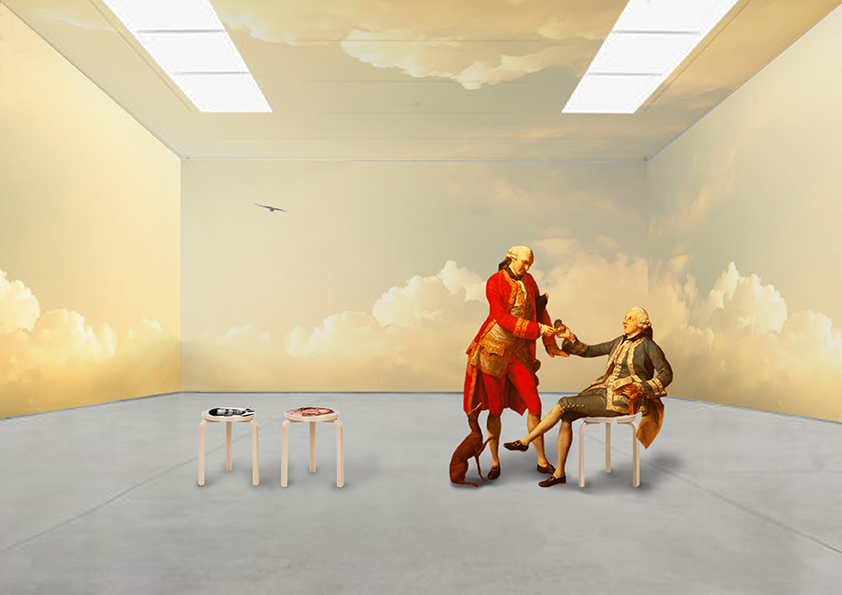
Glenn Walls. (Death and Dancing) In the Park Again. 2024 (Version 4). Alvar Aalto, Stool 60, 1933, paper stack, Image of Scott Johnson who was murdered in 1988 and Ross Warren who was murdered in 1989. Contains an image of the painting, “Sir Sampson Gideon and an unidentified companion”, 1767 by Pompeo Batoni. National Gallery of Victoria. Installation view.
Between the 1970s and early 2000s, before queer visibility came to the fore in Sydney, Australia, many gender and sexual non-normative people living under the conditions of heteropatriarchy managed to develop different ways of interacting with others at queer sites and spaces. Unintelligible in the mainstream cultural imagination, these practices of communication and connection were a means of survival that enabled queer life to flourish. However, when the location of these queer sites became known to certain other social groups, they became epicentres of catastrophic violence, linked to 88 murders. The works developed for “In the Park” explore how gender and non-normative people gravitated to Sydney to create new identities and communities making them the target of stigmatization and violence by a small minority. The artworks argue for the legitimacy of queer life, revealing the extent of violence perpetrated against the LGBTQI+ community. I hope to contribute to a more comprehensive understanding of the historical and spatial dimensions of violence against the LGBTQI+ community and advocate for its more nuanced portrayal in contemporary narratives. By harnessing the language of modernist furniture and maps which created a sense of clean, clinical space free of interpretation, these artworks contest dominant views of modernist design and humanise modernist/minimalist theory and practice to obscure its problematic relationship to identity and sexuality.
National Pride
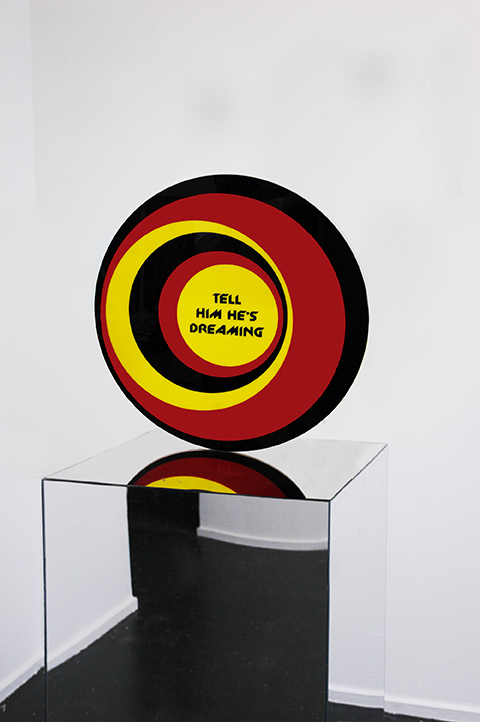
Glenn Walls. National Pride – Indigenous Flag. Acrylic Perspex. 59 cms diameter, 2017.
“Tell him he’s dreaming” is taken from the 1997 Australian movie, “The Castle”.
Why Bother
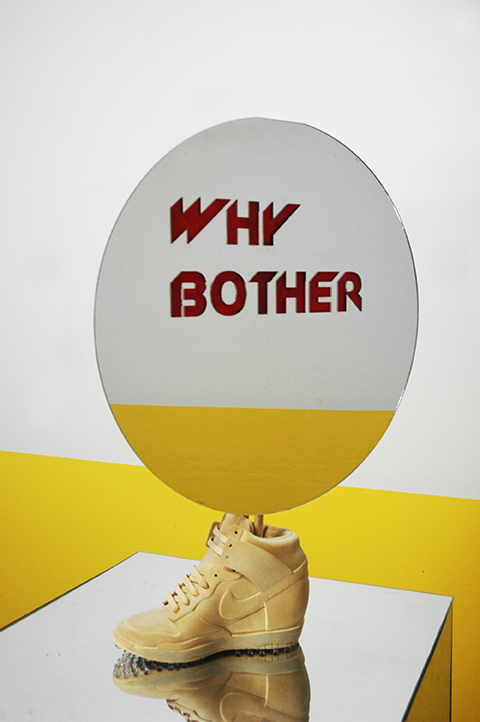
Why Bother. (Woman’s Nike Sky Dunk Hi Essential). Jelutong wood, mirror perspex, yellow paint. 2017

 Glenn Walls - SUPER CREATIVE GRID
leave a comment